Welcome to Night Walkers

Welcome to the website for the most interesting stories and articles in the world of Aliens, UFO's, and Future Technology.
Showing posts with label usa. Show all posts

Friday, September 28, 2007

Skulls on Mars?


The above pictures showing the surface of Mars are probably the strangest I've seen. There are shapes that definately resemble skulls of some kind. Im sorry but how many times do you see rocks on Earth that look exactly like skulls? Not very often. I think its obvious, not just from these photo's that there is something we a not being told about Mars and the Mars program being conducted by NASA.

I wonder why NASA also feel the need to re-colour their photos of Mars to look like a red, dusty, uninhabitable planet. If you see the original photos you will know what I mean. The atmosphere looks very similar to Earth before NASA's 'artists' get their hands on them.

Thursday, September 20, 2007

The X-33 VentureStar


The Reusable Launch Vehicle (RLV) Technology Program is a partnership between NASA and industry to design a new generation of launch vehicles expected to dramatically lower the costs of putting payloads in space. Today's launch systems are complex and costly to operate. The RLV program stresses a simple, fully reusable vehicle that will operate much like an airliner. NASA hopes to cut payload costs from $10,000 a pound, as it is today, to about $1,000 a pound. To accomplish this goal, NASA sought proposals from US aerospace industries for the RLV Technology Program.

On August 5, 1994, President Clinton issued the National Space Transportation Policy and designated NASA as the Lead Agency for advanced technology development and demonstration of the next generation of RLVs. Three concepts and preliminary designs were prepared independently by: (1) Lockheed Martin Skunk Works, Palmdale, California; (2) McDonnell-Douglas Aerospace, Huntington Beach, California; and (3) Rockwell International Corporation, Space Systems Division, Downey, California.

In July 1996, NASA selected Lockheed Martin Skunk Works of Palmdale CA to design, build and test the X-33 experimental vehicle for the RLV program. The selected team consists of Lockheed-Martin (lead by the Skunk Works in Palmdale, CA), Rocketdyne (Engines), Rohr (Thermal Protection Systems), Allied Signal (Subsystems), and Sverdrup (Ground Support Equipment), and various NASA and DoD laboratories. NASA has budgeted $941 million for the X-33 program through 1999. Lockheed Martin will invest at least $212 million in its X-33 design.

Specific technology objectives of the X-33 space vehicle include:
  • demonstrate a reusable cryogenic tank system, including the tanks for liquid hydrogen (LH2) and liquid oxygen (LOX), cryogenic insulation, and an integrated thermal protection system (TPS).
  • verify TPS durability, low maintenance, and performance at both low and high temperatures.
  • demonstrate guidance, navigation, and control systems, including autonomous flight control of checkout, takeoff, ascent, flight, reentry, and landing for an autonomously controlled space vehicle.
  • achieve hypersonic flight speeds (speeds up to Mach 15 or 18,000 km/hr(11,000 mph)).
  • demonstrate composite primary space vehicle structures integrated with the TPS.
  • demonstrate ability to perform 7-day turnarounds between three consecutive flights (a turnaround is the amount of time required from a takeoff and flight until the vehicle is serviced, refueled, and ready to fly again).
  • demonstrate ability to perform a 2-day turnaround between two consecutive flights.
  • demonstrate that a maximum of 50 personnel performing hands-on vehicle operations, maintenance, and refueling can successfully accomplish flight readiness for two flights.
Specific test flight objectives would include demonstration of:
  • successful interaction of the engines, airframe, and launch (also referred to as takeoff) facility.
  • engine performance, thrust, and throttling capability meets specifications.
  • operability and control of the X-33's flight control surfaces (canted fins, flaps, ailerons, etc.)
  • durability of the metallic thermal protection system during repeated flights.
  • performance of the guidance, navigation, and control system.
  • performance of primary operations facilities, including takeoff infrastructure.
  • automated landing at a designated point on the runway.
  • verification of tasks required to service the vehicle on landing and prepare it for next flight in minimal time.
The reusable, wedge-shaped X-33, called VentureStar, will be about half the size of a full-scale RLV. The X-33 will not take payloads into space; it will be used only to demonstrate the vehicle's design and simulate flight characteristics of the full-scale RLV. Lockheed Martin plans to conduct the first flight test in March 1999 and achieve at least 15 flights by December 1999. NASA has budgeted $941 million for the project through 1999. Lockheed Martin will invest $220 million in its X-33 design. After the test program, government and industry will decide whether or not to continue with a full-scale RLV.

The RLV will fly much like the Space Shuttle. It will take off vertically and land on a runway. However, there are differences between the two vehicles. The RLV will be a means of transport only. It will not be used as a science platform like the current Space Shuttle.

Also, the RLV will be a single-stage-to-orbit spacecraft it does not drop off components on its way to orbit. It will rely totally on its own built-in engines to reach orbit, omitting the need for additional boosters. Unlike the shuttle, the RLV will use a new linear aerospike engine, which looks and runs much differently than the bell-shaped Space Shuttle Main Engine. NASA considered the aerospike engine for the Space Shuttle 25 years ago, but opted to use the Space Shuttle Main Engine, also built by Rocketdyne. The aerospike has been revived and enhanced to power the RLV. The aerospike nozzle is shaped like an inverted bell nozzle. Where a bell nozzle begins small and widens toward the opening of the nozzle like a cone, the aerospike decreases in width toward the opening of the nozzle. The aerospike is 75 percent shorter than an equivalent bell nozzle engine. It is also lighter, and its form blends well with the RLV's lifting body airframe for lower drag during flight. The shape spreads thrust loads evenly at the base of the vehicle, causing less structural weight.

The half-scale X-33 test vehicle will use two smaller test versions of the aerospike, whilet the full-scale RLV will use seven aerospike engines. The X-33 main propulsion system (full system of engines and propellant tanks) consists of two J-2S aerospike engines, one aluminum LOX tank in the front, and two LH2 tanks in the rear for short- and mid-range flights. The vehicle could sustain one engine out at liftoff and still have sufficient power from the remaining engine to continue acceleration and make a safe landing at the intended runway or an abort landing area depending on where the engine out occurred during flight. For the long- range flights an engine out situation could be tolerated approximately 30 seconds after liftoff.

The X-33 was scheduled to complete its first flight by March of 1999. As of early 1999 the projected date for the X-33 rollout was May 1999, with its first flight planned for that July. The program is scheduled to be completed by the year 2000. The baseline test program would include a combined total of approximately 15 flights beginning in July 1999 and concluding in December 1999. The baseline test flight plan includes three short-range, seven mid-range, and five long-range test flights. Actual numbers of test flights to any range may vary due to changing plans and/or actual test flight data evaluation.

Test flights involve: (1) launching the X-33 from a vertical position like a conventional space launch vehicle?this reduces the weight of the landing gear and wheels to only that required to support an unfueled vehicle (baseline dry weight of vehicle is approximately 29,500 kg (65,000 lb) and fueled weight of X-33 is approximately 123,800 kg (273,000 lb)); (2) accelerating the vehicle to top speeds of Mach 15 (15 times the speed of sound or approximately 18,000 km/hr (11,000 mph) and reaching high altitudes up to approximately 75,800 m (250,000 ft); (3) shutting down the engines; gliding over long distances up to 1,530 km (950 mi) downrange of the launch site followed by conducting terminal area energy maneuvers to reduce speed and altitude; and (4) landing like a conventional airplane.

Optimally, the flight test plan to meet Program objectives would involve flights of approximately 160, 720, or 1,530 km (100, 450, and 950 mi). Landing sites meeting the above criteria and providing 3,050 m (10,000 ft) of hard surface are referred to as short-, mid-, and long-range landing sites, respectively. The X-33 Program prefers to land the vehicle on a dry lake bed at least for its first flight in order to have a wider and slightly safer landing area than conventional runways offer. The same philosophy was used for the Orbiter's and most X-planes' first landings.

The launch site is located within Edwards Air Force Base, California. A total of fifteen launches are scheduled over a period of approximately one year. The X-33 will blast off from the site near Haystack Butte, located at the eastern edge of the Base near the AFRL/PR. Predominantly local NASA and USAF tracking and command assets will be utilized to support this phase of flight. Construction of the X-33 launch site at was completed in December 1998, just a little more than 12 months after groundbreaking.

Once the X-33 is readied for flight, the engines will be fired two times on the launch pad, with the second firing having a duration of 20 seconds. The longest flight will be approximately 20 minutes at an altitude of about 55 miles. The plan is to demonstrate a 2-day turnaround for the vehicle. Landing sites include Silurian Dry Lake Bed, Michael Army Air Field and Malmstrom Air Force Base. One of NASA's 747s will be used to carry the X-33 from its landing destinations back to Edwards.

Silurian Dry Lake Bed near Baker, California is approximately 3000 feet wide and 12000 feet long. The lake bed will be the site of the first landing attempts for the X-33 vehicle. Three flights are scheduled to Silurian Lake that will include vehicle speeds in excess of Mach 3. The flights are scheduled to start in mid 1999.

Michael Army Airfield will be the second landing site for the X-33. This will also be the first downrange runway landing. Michael Army Airfield is part of the Utah Test and Training Range, located south of Salt Lake City. This airfield is located on the eastern boundary of Dugway. The airfield has a 3,960 m (13,000 ft) long by 61 m (200 ft) wide hard surfaced runway. Immediate surrounding terrain is relatively flat. It is a secure facility with a long history of flight operations. The airspace above Dugway Proving Ground is restricted military airspace controlled by Hill Air Force Base which manages and approves use of the Utah Test and Training Range (UTTR). Seven flights are scheduled to Michael with vehicle speeds in excess of Mach 10. Flights are scheduled to start in the latter part of 1999.

Malmstrom Air Force Base will be the third and final landing site for the X-33. The airfield was closed on Decmeber 31, 1996, except for the area used by helicopters of the Malmstrom's Air Rescue Flight. The airfield has a hard surface runway approximately 3,500 m (11,500 ft) long and 61 m (200 ft) wide with a 305 m (1,000 ft) overrun at each end. Since closure of the airfield, the USAF has no plans or budget to operate the runway. Five flights are scheduled to the Malmstrom runway with vehicle speeds in excess of Mach 15. Flights are scheduled to start in the spring of 2000.

Friday, September 14, 2007

NASA's 'Morphing Airplane'

Image caption:
An artist's rendering shows advanced concepts NASA envisions for an aircraft of
the future. Called the 21st Century Aerospace Vehicle, and sometimes nicknamed
the Morphing Airplane, the concept includes a variety of smart technologies that
could enable inflight configuration changes for optimum flight characteristics.
Now this is a strange concept to begin working on. An aerospace vehicle that morphs depending on various flight characteristics. Obviously NASA tell the whole truth and nothing but the truth so this is as they say just an 'advanced concept'.......Yeah Right, we all know that when a project is anounced it has more than likely been in operation for numerous years prior to the announcement.

Kliper: too many unknowns

MOSCOW. (RIA Novosti political commentator Andrei Kislyakov) - People say that Russians and Americans are very much alike. Mentally, of course. Especially when we think of something big and impressive, such as a space effort.

Sometimes, we copy each other's problems with mirror-like precision. Here is the latest example.

Until recently no one could doubt the prospects of Russia's reusable space transport system. For some years the Russian Space Agency (Roskosmos) has been talking its head off about the Kliper craft as the system's core. When early this year a tender was announced for developing and manufacturing a spaceship, it was a mere formality. Everybody knew the winner would be the Energiya Rocket and Space Corporation's Kliper project. Its features have been paraded dozens of times, its mock-ups have been on display at shows and exhibitions from Tokyo to Paris to Berlin. The fruit was about to fall from the tree.

Also until recently we knew practically nothing of a similar American project. The Americans intend to build, under NASA's Constellation Program, the reusable Crew Exploration Vehicle (CEV) for missions to the International Space Station and, later to the Moon and Mars.

Overnight everything changed. Late in June, speaking at the Farnborough aerospace show, the Roskosmos leadership suddenly announced that they were suspending the tender and would instead adopt a multi-stage program of creating a space transport vehicle. Now the main emphasis is on the time-tested orbital workhorse, the Soyuz spacecraft. On the American side, everything is tip-top and clear. They have even come up with a name: Orion.

From elementary algebra we know that a linear equation like X + 5 = 10 can be solved when there is only one unknown. The Americans seem to be on good terms with mathematics. According to NASA's interpretation, everything is clear and understandable. If the two aerospace giants - Lockheed Martin and Northrop Grumman - plus Boeing, which all claim leadership of the Constellation Program, are given the 1.1 billion dollars allocated for the development and construction of the spacecraft by 2012, we will get the desired X: the Orion.

For the Russian program, or its new package, it is impossible even to compile a rough equation. Here is a quote from an Internet news briefing held by Roskosmos chief Anatoly Perminov, who on July 24 tried to explain the sudden change in the plans to build a Russian space transport system.

"The year-by year breakdown of research and development costs provided by companies bidding to build a likely ship, in particular the Kliper, exceeds the figures in the Russian Federal Space Program budget for 2006-2015, so the program must be drastically changed.

"In view of the above, after examining the bids, a proposal by the Energiya Rocket and Space Corporation to develop a promising transport system in two or three stages was given preference. Its suggestion for the first stage is to upgrade and modernize the Soyuz spacecraft, which has proved its worth over forty years of operation by being very reliable and relatively cost-effective in taking a crew member to an orbiting station. The modernization effort, in our view, should ensure that the new Soyuz makes not only orbital flights, but also missions to the Moon, making room for new engineering solutions and system tests for use in the next stages of development of a new-generation craft. The results of first-stage work may help us to decide on the type of the next-generation ship, if one is necessary."

Even a cursory glimpse at the quote suggests there are three unknowns involved. The first is money. The part about "breakdown of costs" leads us to understand that no money has been or is available for the Kliper.

Strange. The new spacecraft has been in the news for some time now. Time enough for its full-scale replica to be put on view at the MAKS-2005 air show in Zhukovsky outside Moscow, where it was photographed by dozens of journalists and seen by hundreds of tourists. A bit later, a special government resolution, dated October 22 and numbered 635, approved Russia's Federal Space Program. The Manned Flights subsection explicitly tells us that "... steps are planned to develop a new-generation spacecraft."

It emerges that Energiya and all the rest of them have been working on something which was in no way to be subsidized. Or, if subsidized, then the program had to be "drastically changed."

To my knowledge, Energiya has estimated the cost of the Kliper project at $1 billion. Let us recall, incidentally, the American program's $1.1 billion. But the Federal Program budgeted only one-third of that sum. In other words, a super-modern craft was to have been built without sufficient financing. But I do not think that anyone would ever have managed to develop and build a space transporter for the price of a pair of pantyhose.
The second unknown in this para-mathematical solitaire is the space veteran, the manned Soyuz ship. Why all this fuss with the Kliper if Energiya always had an ace up its sleeve - the Soyuz orbiter - which can easily be passed off as a Lunik? True, upgrading the ship would involve substantial outlays, as an old rule of thumb says about recarving something old into something new.

And the last unknown is the Kliper itself, which will now get a new lease on life "if necessary". This "if" breeds sad thoughts about the prospects for the re-engineered Soyuz and its ability to stride across centuries.
It is clear that developing a Kliper-type reusable spacecraft was attempted on the off-chance that it would be possible to fund it, which is so typical of Russians. But the well-spinned Russian idea failed to catch the attention of both Russian and foreign sponsors.

No one disputes that Russia is a great space power, and no one will ever doubt it as long as we throw out the deadwood of "unknowns" from our programs.

Tuesday, September 4, 2007

NEW evidence provided by William Rutledge, CDR of the Apollo 20 crew

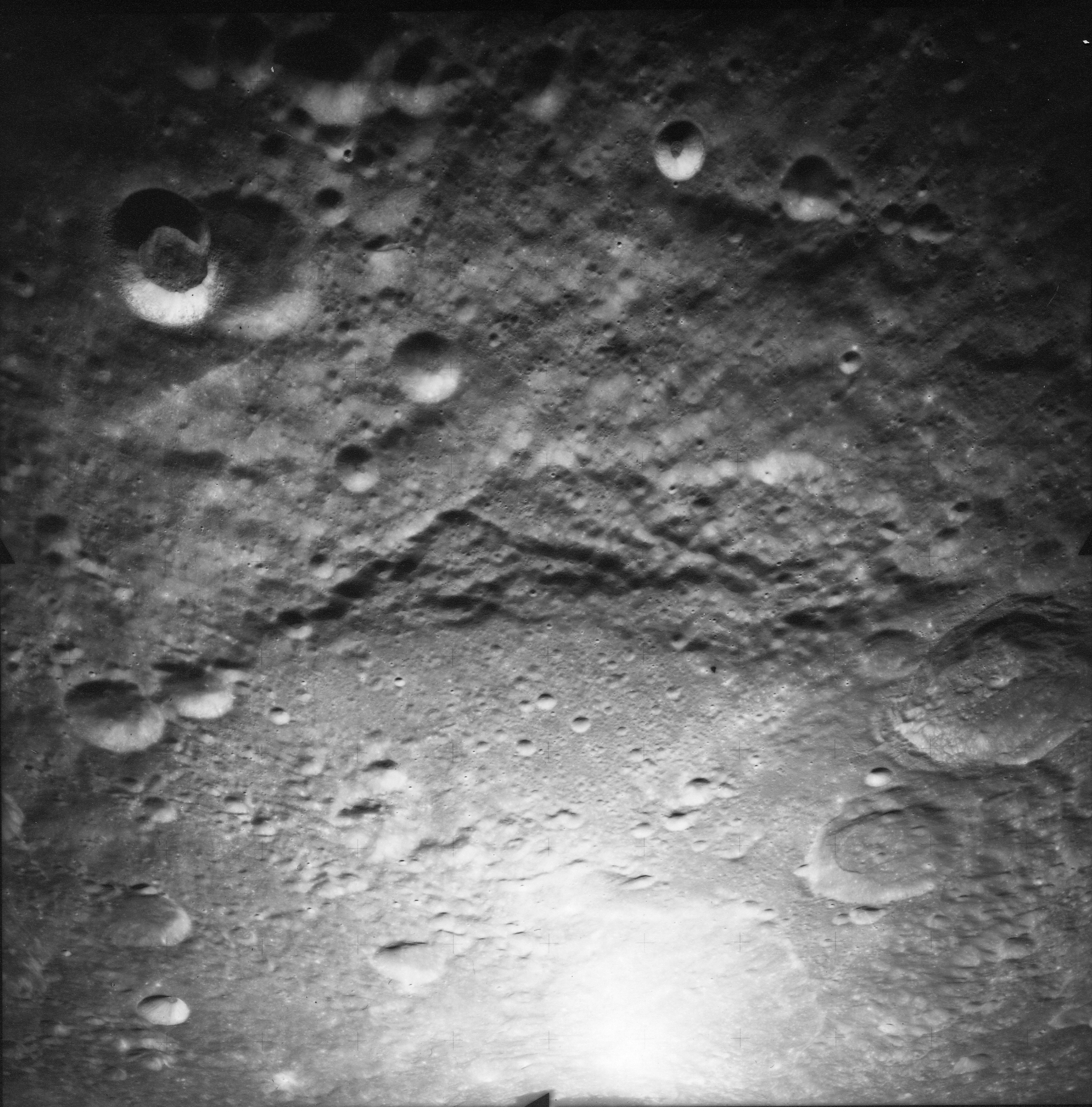
The Apollo 15 mission found a huge object on the backside of the Moon: did Apollo 19-20 missions really take place?

New and baffling video footage on YouTube provided by W. Rutledge seem to corroborate his amazing story

A few weeks ago I interviewed a man by the name of William Rutledge, who has been claiming his identity: he would have been an astronaut during the '70s, employed by the USAF in collaboration with NASA during a secret Space mission. My interview was carried out by my YouTube Account/General Messages. William Rutledge registered himself on YouTube as a man of 76 years old (YouTube user: "retiredafb"), who now lives in Rwanda. He told me he is an American citizen, now civilian, born in Belgium in 1930 and employed by USAF as test pilot on various aircrafts.

According to his report supported by some outstanding videos uploaded on YouTube since April 2007, after the Apollo 17 (December 1972) and the "Apollo18-Soyuz" mission taken place in July 1975, there were other two missions on the Moon: the Apollo 19 and the Apollo 20. Officially many Apollo missions were canceled by NASA during the Project Apollo, included the Apollo 20 (canceled in 1970).

The goal of these two presumed secret joint space mission, result of an American-Soviet collaboration, was to reach the backside of the Moon (the Delporte-Izsak region, close to the well-known Tsiolkovsky crater) and to explore a huge object found out during the Apollo 15 mission. What the Apollo 20 crew found, it was a huge and ancient alien spaceship, (W. Rutledge).

And as a matter of fact, some official NASA pictures archived by the LPI (The Lunar and Planetary Institute in Houston), which is "a research institute that provides support services to NASA and the planetary science community" (http://www.lpi.usra.edu/lpi/about.shtml), show a strange and big object on the far side of the Moon. LPI is "is managed by the Universities Space Research Association (USRA)".

Here you are some of the details of those NASA pictures which show that cigar-shaped object:


http://www.lpi.usra.edu/resources/apollo/images/print/AS15/M/1333.jpg

http://www.lpi.usra.edu/resources/apollo/images/print/AS15/M/1037.jpg

On the video of the flyover of the Lunar Module LM-15 (I checked on some Space history abstracts: the name of the spacecraft is coherent with the historical succession, because the Lunar Module Number begins from Apollo 5, with the LM-1, and for example for the Apollo 11 mission the name of the Lunar Module is LM-5; for some reasons not always the progressive number of the LMs is in accordance with the Apollo mission number), we have just a second of another marking about a video of the former Apollo 11 Mission.

The presence of an intrusive frame in the footage it would seem to be a contradiction, but perhaps it is just a result of a probable former recording on the film. According to William Rutledge (see my interview already mentioned), the first time he had to do with the footages was 15 years ago, because somebody he knew, charged to maintain security around a container, contacted him and told him what he found out inside.

I found another contradiction, which seems a sort of video pollution: the written comment by Rutledge about the video posted on April 9 and entitled "APOLLO 20 Legacy liftoff of Apollo 20 saturne 5", says: But the codec audio on YouTube is from the Apollo 11 mission. I'm sure about it, because I have carefully compared the video on YouTube with an official NASA video of the Apollo 11 lift-off. Rutledge, contacted by me about it, has confirmed the probable mixing. And it could be possibile, if you consider that some of his friends in Rwanda are helping him in the transfer from the analogical films to the digital, and William Rutledge told me now he's not in Africa. So, if his friends have not a very good knowledge of the subject and of the Space history, they could make mistakes in assembling the codecs video with the codecs audio.

For the rest the Rutledge's report is enough coherent and plausible, and it shows a detailed knowledge of Aerospace history, of Geology, Chemistry and of Space exploration history, using specific terms. For example, he mentioned in the interview a not well-know term: the "feldspathoid", a " mineral consisting of an aluminous silicate that has too little silica to form feldspar" (Webster's Third New International Dictionary", Könemann, 1993,pag. 835).

HISTORICAL EVIDENCE SEEMS TO CORROBORATE THE AMAZING STORY OF THE APOLLO 20

1) THE ROCKWELL CORP. LOGO ON THE OVERALLS
On June 18 2007 William Rutledge (with the help of his friends in Rwanda) uploaded on YouTube new evidences which seem to corroborate his amazing story: the APOLLO 20 TEST Launch pad, the APOLLO 20 Test EVA 1 and the APOLLO 20 TEST Snyder Ingress.

For the last video here mentioned, W. Rutledge wrote the following text as comment:

"In the video you can see some technicians by a presumed launching pad for astronauts. In the footage (a capsule Ingress test?) they're helping two astronauts (who would be William Rutledge and Leona Marietta Snyder, former Bell Laboratories), who wear their space suits, to enter into a presumed spacecraft by a launching pad. The footage seems to be the editing of three different moments, in front of the entrance."

The important point is that on the back of the technician's overalls, you can see what it seems the Rockwell corporation logo. Moreover, one of them has on the back the NASA logo. If you give a look to the Boeing's official website, you can find the following statement: "North American Rockwell designed and built the Saturn V second stage and the command and service modules. source: http://www.boeing.com/history/bna/apollo.htm

Moreover, besides to be the manufacturer of spacecrafts, that company (the Rockwell) planned and developed several military aircrafts. You can find more information on Wikipedia: North America was responsible for the famous WWII P-51 Mustang fighter and Korean War-era F-86 Sabre, as well as the Apollo spacecraft. source: http://en.wikipedia.org/wiki/Rockwell_International

Since the 1973 the name of the corporation changed: the North American Rockwell Corporation became the Rockwell International Corporation. W. Rockwell died in 1978, and since that time the corporation began a series of spin-offs. What remains of the company is the Rockwell Collins (COL) and the Rockwell Automation (ROK). The Rockwell International no longer exists.

2) IN THE LAST OF RUTLEDGE'S FOOTAGE, THE CAPSULE INSIDE LOOKS LIKE AN APOLLO SPACECRAFT
The last video uploaded on YouTube by William Rutledge (retiredafb) on June 24, 2007, is really amazing:
In the comment he wrote:

"CSM 16mm footage through the AGC lens... CSM 16mm footage through the AGC lens, made by Leona Snyder. Camera is fixed on the eyepiece of the telescope, less dropouts or moves than the TV feed from the LM. Frame transfer is not perfect,speed is faster than actual, 4 different speeds were used on the 16 mm camera".

Apart from the evocative 16mm footage by Leona M. Snyder in which you can see the details of the presumed abandoned alien spaceship on the far side of the Moon, during the flyover of the Apollo 20 CSM, in my opinion the decisive frames from the historical point of view are the first. At the beginning of the footage, in fact, you can see the Spacecraft controls and instruments. If you compare them, for example, with the 35mm photos available from the Apollo 17 Image Library of the Apollo Lunar Surface Journal, you will recognize almost every part of the capsule inside (source: http://www.ehartwell.com/Apollo17/AS17-35mm.htm).

Moreover, instead of the American flag, you have the union of the American with the Soviet flag, over the Apollo 20 patch. It does make sense using the same technology to go to the Moon, already tested with success, if you think that Apollo 17 mission took place at the end of 1972, as the presumed Apollo 20 in August 1976. And just the year before there was the well-known Apollo-Soyuz mission: Apollo 18 was the Apollo-Soyuz project, the honeymoon before a moon landing mission, it was presented as a simple "shaking hands " mission in 1975 (from the interview with W. Rutledge).

Waiting for the rest of the Rutledge's testimony, we should prepare ourself for the wait and new Copernican revolution: we are not alone in the Universe and, at last, historical and technical evidences are supporting it beyond any doubt.

What we need is an official declaration from Authorities. Perhaps, the American Code of Federal Regulations and the Public Law 91-76 created by U.S. Congress could help us to find the truth (see: http://history.nasa.gov/spacemedal2.pdf), together with a formal recommendation/petition to the NASA Administrator, to give a right recognition to the Apollo 19-20 crews.

It would be a good thing to disclose and spread the truth about the reality of the extraterrestrial intelligence in the Universe through an unknown historical fact in which the two great powers of the World of the past (the USA and the USSR) joined together for scientific and peaceful activities, in spite of all their differences and political hostilities.

As pointed out by William Rutledge in one of his comments on YouTube:

"the apollo 20 belongs to all mankind It is a part of all human's heritage".

Virgilio wrote:

"The Apollo 20 patch quotes it. Maybe we are those grandchildren…